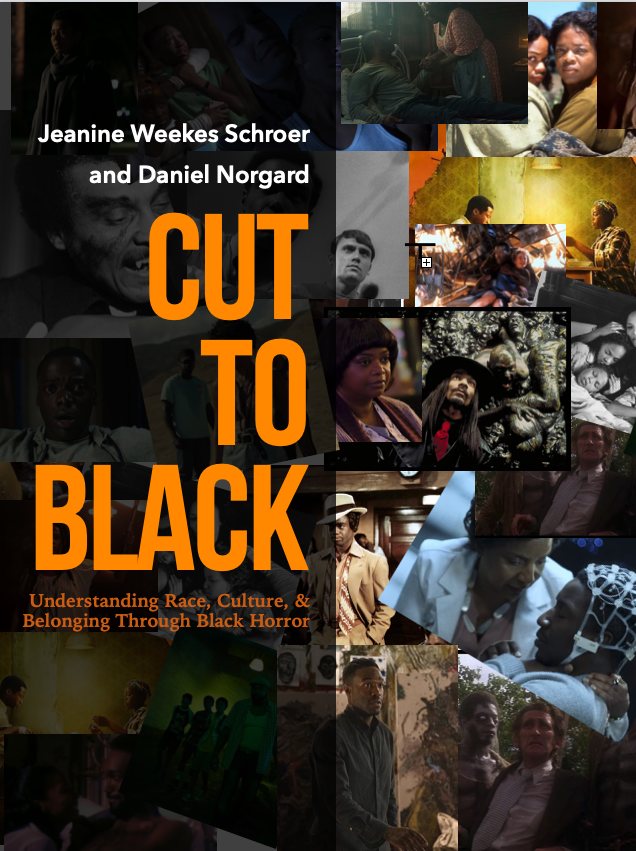
The goal of this text is to support folks in transforming their engagements with Black Horror films into an opportunity for reflection on their own beliefs about race and racism and to use drama, empathy, and catharsis to extend their understanding of the way that race and racism operate (particularly in the U.S.).
The book will start by unpacking the way that film and particularly genre film is poised to help us tackle complex questions, complex emotions, in a way that is enjoyable, low stakes, and even private (all though it is more fun with other people). Next it will briefly tackle territory that has already been well traveled by other authors: The history of Black Horror, particularly its transition from Blackness as the object of horror— as monster or boogieman — to Blackness as the subject of horror. It is this transition that is the core interest of this book.
The remainder of this book will provide grounds for exploration of a dozen significant examples of Black horror films, including: pre and post-watch reflection questions; discussion of key tropes; analysis from the perspective of both horror and Black ethics and politics; recommendations for additional viewing and recommendations for additional reading.
Finally, the book will close with a reflection on the brightness of Black horror's future.
The book will start by unpacking the way that film and particularly genre film is poised to help us tackle complex questions, complex emotions, in a way that is enjoyable, low stakes, and even private (all though it is more fun with other people). Next it will briefly tackle territory that has already been well traveled by other authors: The history of Black Horror, particularly its transition from Blackness as the object of horror— as monster or boogieman — to Blackness as the subject of horror. It is this transition that is the core interest of this book.
The remainder of this book will provide grounds for exploration of a dozen significant examples of Black horror films, including: pre and post-watch reflection questions; discussion of key tropes; analysis from the perspective of both horror and Black ethics and politics; recommendations for additional viewing and recommendations for additional reading.
Finally, the book will close with a reflection on the brightness of Black horror's future.